
Joy and Sorrow within One Heart
The ProphetThis flow traces the argument that joy and sorrow are joined experiences, with pain deepening the capacity to receive delight rather than standing wholly apart from it.
increasing Bearing strength in each event
 decreasing
Bearing strength in each eventdecreasingJoy Unmasked

Joy Unmasked
One Well, Two Expressions
Almustafa says that joy is sorrow unmasked and that the well from which laughter rises was often filled with tears. He begins by placing the two feelings in a shared source.
Emotion Reconsidered
Joy is not presented as a state untouched by grief. The teaching asks listeners to look beneath a feeling’s surface and recognize the history held within it.
Sorrow Carves Capacity
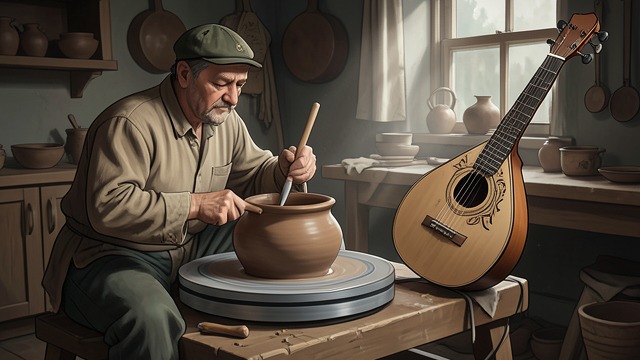
Sorrow Carves Capacity
A Wider Heart
Almustafa says the deeper sorrow carves into a person, the more joy that person can contain. Grief becomes a shaping force that enlarges the capacity for feeling.
Art Made by Pressure
He compares the heart to a cup fired in a potter’s oven and a lute hollowed by knives. The forms that hold and express beauty bear the marks of what was done to them.
Delight Remembers Grief

Delight Remembers Grief
Looking into Joy
Almustafa asks the joyful to look into the heart and find that what once gave sorrow may now give joy. Present delight is connected to earlier loss and longing.
Grief Remembers Delight
He asks the sorrowful to look again and see that they grieve for what had been their delight. The movement works both ways, making each feeling an echo of the other.
The Two at the Table

The Two at the Table
Inseparable Companions
Almustafa rejects the claim that joy or sorrow is greater. When one sits at a person’s table, the other sleeps upon the bed.
Feeling Moves in Pairs
The image makes the relationship intimate and continuous, not an abstract balance between opposites. A person may experience one feeling openly while the other remains close and waiting.
The Scales Rise and Fall

The Scales Rise and Fall
A Changing Measure
Almustafa compares people to scales suspended between sorrow and joy. Only when empty are they at a standstill and balanced.
No Permanent Settlement
The image closes by showing emotional life as movement under changing weight. Balance is not the permanent defeat of one feeling but a temporary stillness within a continual rise and fall.
At the beginning of the joy and sorrow teaching
Early in the joy and sorrow teaching
In the middle of the joy and sorrow teaching
After the paired reflections on joy and sorrow
At the conclusion of the joy and sorrow teaching
